
Welcome to your home maintenance guide. Drafts enter through gaps. Heat escapes through cracks. Your money disappears into thin air. You can stop this today. Weatherstripping seals your doors and windows. It keeps the warm air inside. It keeps the Vancouver rain outside. Choosing the right material saves you cash. Use this guide to compare your options.
The Cost of Air Leaks
Small gaps cause big problems. A thin crack under a door equals a wide hole in a wall. Your furnace runs longer. Your electricity bill rises. Air leaks also let in moisture. Vancouver humidity leads to mold. Sealing these gaps is the cheapest way to lower costs. It improves comfort in every room. Start in the West End. Check the windows in Yaletown. Inspect the doors in East Vancouver. Every gap matters.
Weatherstripping Type 1: Foam Tape
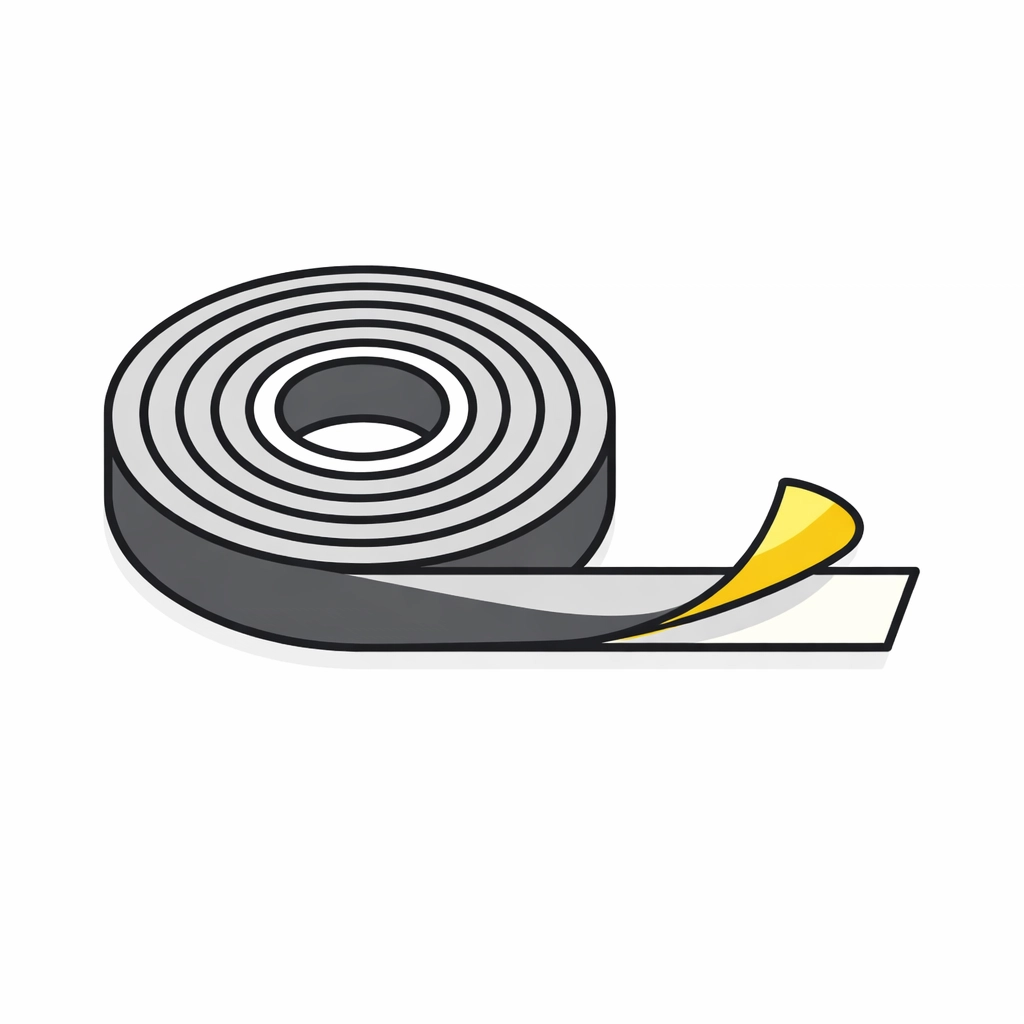
Foam tape is the simple choice. It comes in rolls. One side has adhesive. You peel the backing then stick it to the frame.
Best Uses
Use foam tape for small gaps. It works on window sashes. It works on door frames. It is best for interior doors. Use it in Richmond condos. Apply it to attic hatches in Burnaby.
Pros
- Inexpensive to buy.
- Easy to install.
- Compresses into tight spaces.
- Available at any hardware store.
Cons
- Wears out quickly.
- Not for high-traffic doors.
- Traps moisture.
- Needs replacement every year.
Weatherstripping Type 2: V-Strip (Tension Seal)
The V-strip is a durable option. It is made of plastic or metal. It folds into a V-shape. The material springs open to bridge gaps.
Best Uses
Install these in the side channels of windows. Use them on the top and sides of doors. They work well in Kerrisdale heritage homes. They fit narrow gaps in UBC housing.
Pros
- Very effective seal.
- Invisible when the door is closed.
- Lasts many years.
- Durable against friction.
Cons
- Harder to install than foam.
- Metal edges can be sharp.
- Surfaces must be perfectly flat.
Weatherstripping Type 3: Silicone Gaskets
Silicone is the premium choice. It has high memory. This means it returns to its original shape. It does not stay flat after compression.
Best Uses
Use silicone for exterior doors in North Vancouver. Use it where temperatures fluctuate. It handles the cold well. It handles the heat well. It is perfect for high-end Westside properties.
Pros
- Best durability.
- Resists water and mold.
- Stays flexible in winter.
- Seals uneven gaps.
Cons
- Higher upfront cost.
- Requires clean surfaces for adhesive.
Weatherstripping Type 4: Rubber and Vinyl
Rubber and vinyl are heavy-duty materials. They often come attached to wood or metal strips. You screw them into the door frame.
Best Uses
Apply these to the main entrance. Use them in South Vancouver basements. They block heavy drafts. They block noise from Main St traffic.
Pros
- Extremely tough.
- Handles heavy use.
- Blocks wind and sound.
- Seals large gaps.
Cons
- Visible on the door frame.
- Requires a drill for installation.

Weatherstripping Type 5: Door Sweeps and Shoes
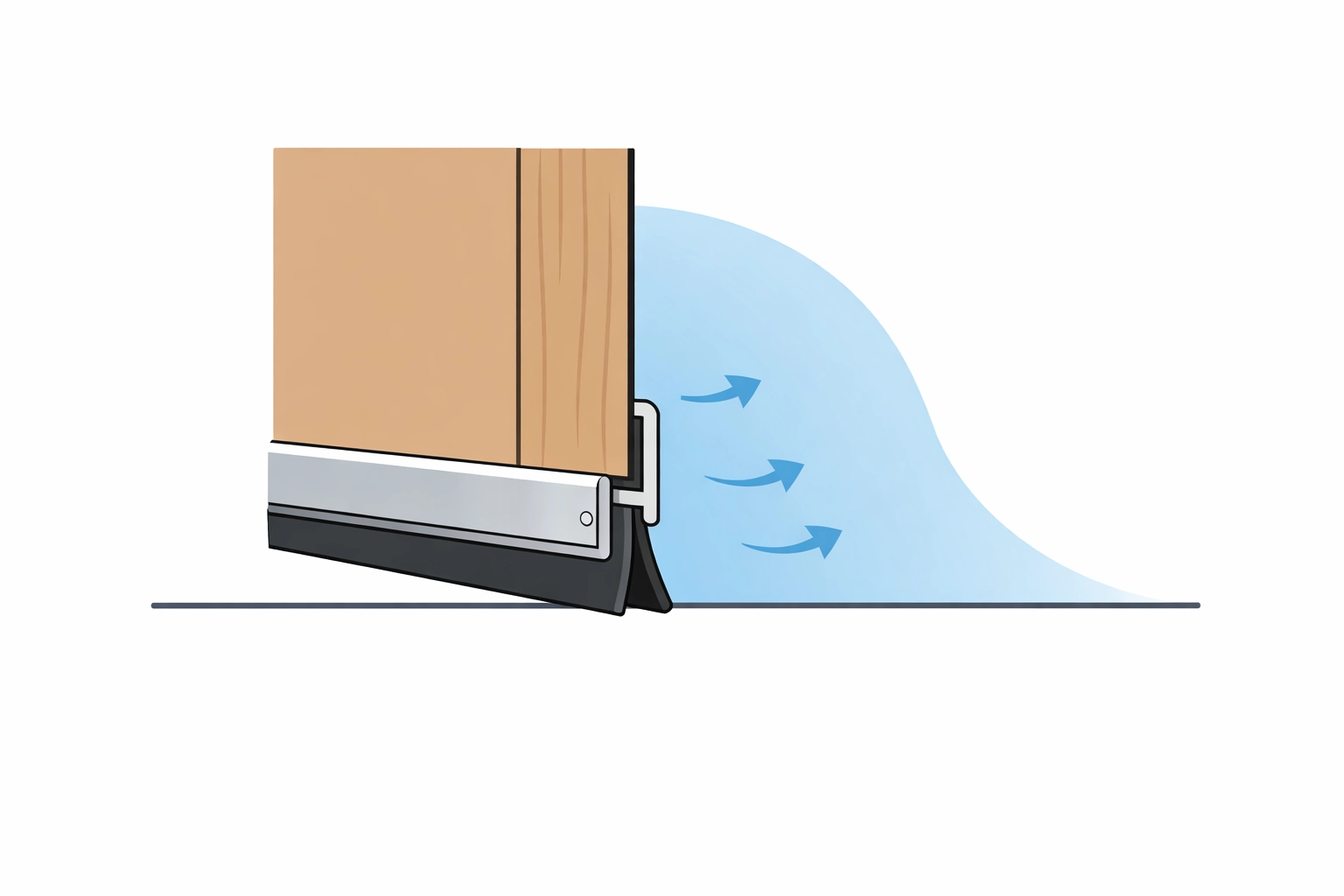
The bottom of the door is the biggest leak. Door sweeps attach to the bottom face. Door shoes wrap around the bottom edge.
Best Uses
Every exterior door needs a sweep. Use them in West Vancouver to block salt air. Use them in South Main St shops to keep out dust.
Pros
- Stops drafts at floor level.
- Prevents insects from entering.
- Stops water from blowing under the door.
Cons
- Can drag on carpets.
- Needs periodic adjustment.
Comparing the Options
| Material | Durability | Ease of Install | Best For |
|---|---|---|---|
| Foam Tape | Low | Easy | Small interior gaps |
| V-Strip | Medium | Moderate | Window tracks |
| Silicone | High | Moderate | All-weather exterior |
| Rubber/Vinyl | High | Hard | Main entry doors |
| Door Sweep | High | Moderate | Door bottoms |
Factors for Vancouver Homeowners
Vancouver has unique weather. Rain is constant. Humidity is high. Temperatures stay mild but damp. Choose materials that resist moisture.
Rain Resistance
Avoid open-cell foam in wet areas. It acts like a sponge. It holds water against the wood. This causes rot. Choose silicone or vinyl instead. They shed water. They keep your door frame dry. This is vital for homes in North Vancouver and the West End.
Temperature Memory
Materials expand and contract. Silicone maintains its shape the best. It seals even when the wood swells in winter. It stays tight when the wood shrinks in summer.
Noise Reduction
Living near Main St or South Main St is loud. Thick rubber gaskets reduce noise. They create a vacuum-like seal. This keeps the city sounds outside.
How to Install Weatherstripping
Follow these steps for a perfect seal.
1. Clean the Surface
Remove old weatherstripping. Use a putty knife. Scrape away old glue. Wash the area with soapy water. Dry it with a cloth. Rub the surface with alcohol. This ensures the new adhesive sticks.
2. Measure Twice
Measure the height of the door. Measure the width of the top. Measure the gap size. Do not guess. Write the numbers down.
3. Cut to Size
Use sharp scissors for foam or silicone. Use a hacksaw for metal strips. Cut the pieces slightly long. You can trim them later.
4. Apply the Seal
Start at the top corners. Peel the backing slowly. Press the strip into place. Work your way down the sides. Ensure the strip meets the corner tightly.
5. Test the Door
Close the door. Look for light coming through. If you see light, air is escaping. Adjust the strip. Feel for drafts with your hand. The door should be slightly harder to close. This means the seal is tight.

Professional Installation Benefits
Doing it yourself is possible. Doing it right is harder. Improperly installed strips peel off. They can prevent the door from locking. They can cause the door to rub against the floor.
Randall The Handyman knows Vancouver homes. We understand the specific needs of Kerrisdale estates and Yaletown condos. We bring the right tools. We use the best materials. We ensure your home is airtight.
Our Pricing
We keep pricing simple and transparent.
- $120 for the first hour.
- $85 for each additional hour.
We work quickly. We serve all areas. We visit Richmond. We drive to Burnaby. We help in North Vancouver.
Stop the Drafts Today
Do not wait for the next storm. Do not wait for a high heating bill. Check your doors now. Look at your windows. If you feel a breeze, you are losing money.
Pick a material. Buy the tools. Clean the frames. Apply the seals. Or call a professional. Save your cash. Protect your home. Maintain your comfort.
Contact Randall The Handyman. Schedule a visit. Secure your home. Start saving.
