
Your front door might be bleeding money right now.
The U.S. Department of Energy says air leaks from your front door can waste up to 20 percent of your home's heat. That's real cash flowing straight outside.
Most Vancouver homeowners lose $150 to $350 every year on heating and cooling because of door problems. The good news? You can fix most of these issues fast.
Let me show you the five door problems that spike your energy bills and what you can do about them.
Problem #1: Gaps and Poor Sealing Around Your Door
Stand near your front door on a cold day. Feel that draft? That's your money escaping.
Even a tiny 1/8-inch gap under your door lets in as much cold air as punching a 2.5-inch hole in your wall. Think about that for a second.
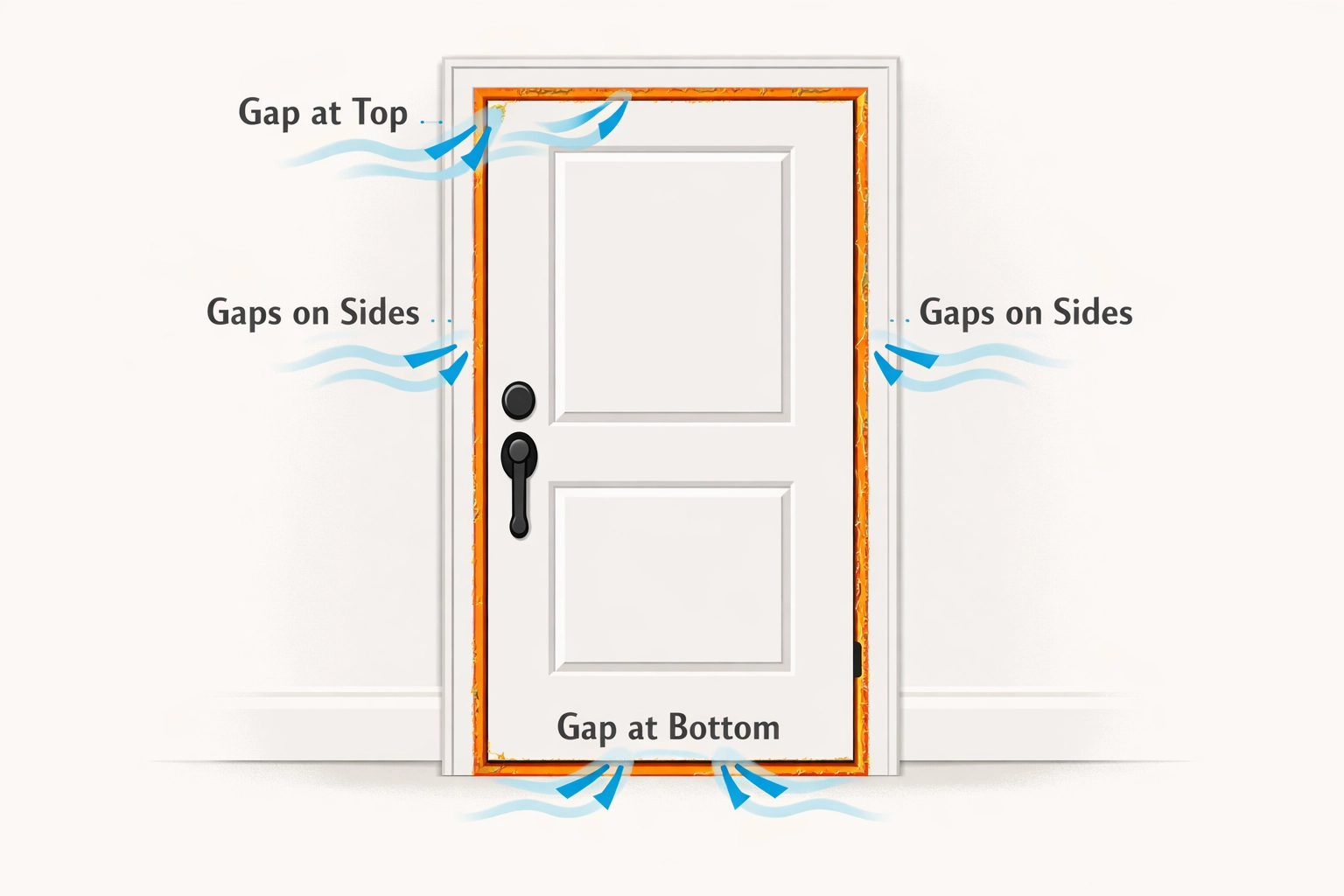
Check your door frame right now. Look for:
- Light coming through the edges when the door is closed
- Visible gaps between the door and frame
- Worn or cracked weatherstripping
- Draft you can feel with your hand
Weatherstripping costs $20 and takes 30 minutes to replace. You'll feel the difference immediately.
Door sweeps block the gap at the bottom. Install one and watch your heating bill drop.
If you see gaps wider than a quarter inch, your door needs adjustment. The frame might have shifted or the hinges could be loose.
Problem #2: Your Door Material Is Working Against You
Not all doors insulate the same.
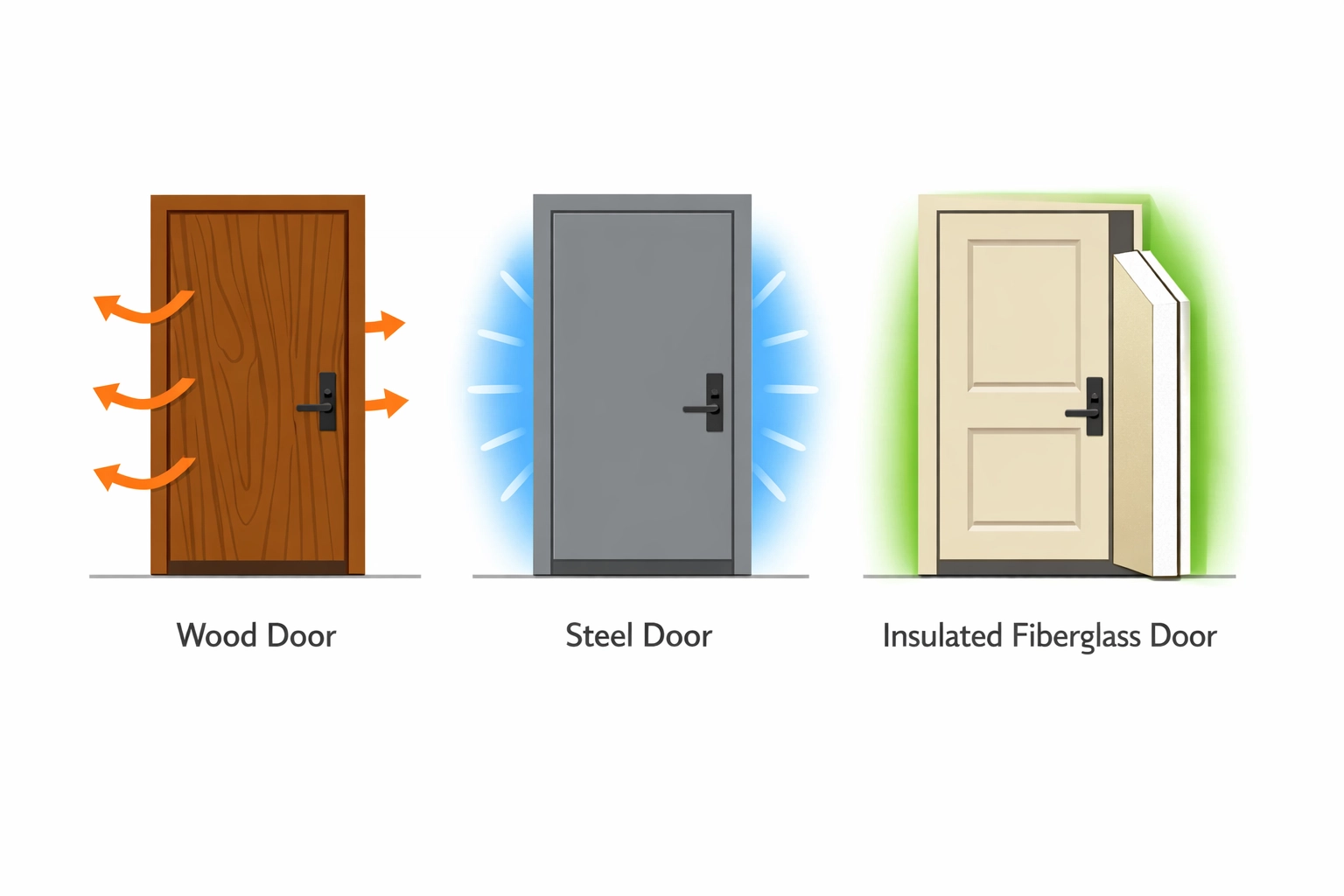
Wood doors look great but they're terrible at keeping heat inside. Wood is porous. It absorbs moisture and expands. It contracts when it dries. That creates gaps.
Steel doors conduct heat straight through. Touch a steel door on a cold Vancouver morning. It feels like ice because it is ice. All that cold transfers right into your home.
Hollow-core doors are the worst. They have almost zero insulation inside. You might as well leave a window open.
Fiberglass doors with polyurethane foam cores are the most energy-efficient option available. They don't warp. They don't conduct heat. They keep the cold outside where it belongs.
If your door is old wood or hollow steel, replacement pays for itself in energy savings within a few years.
Problem #3: Single-Pane Glass Is Killing Your Efficiency
Got glass panels in your front door? Check how many layers.
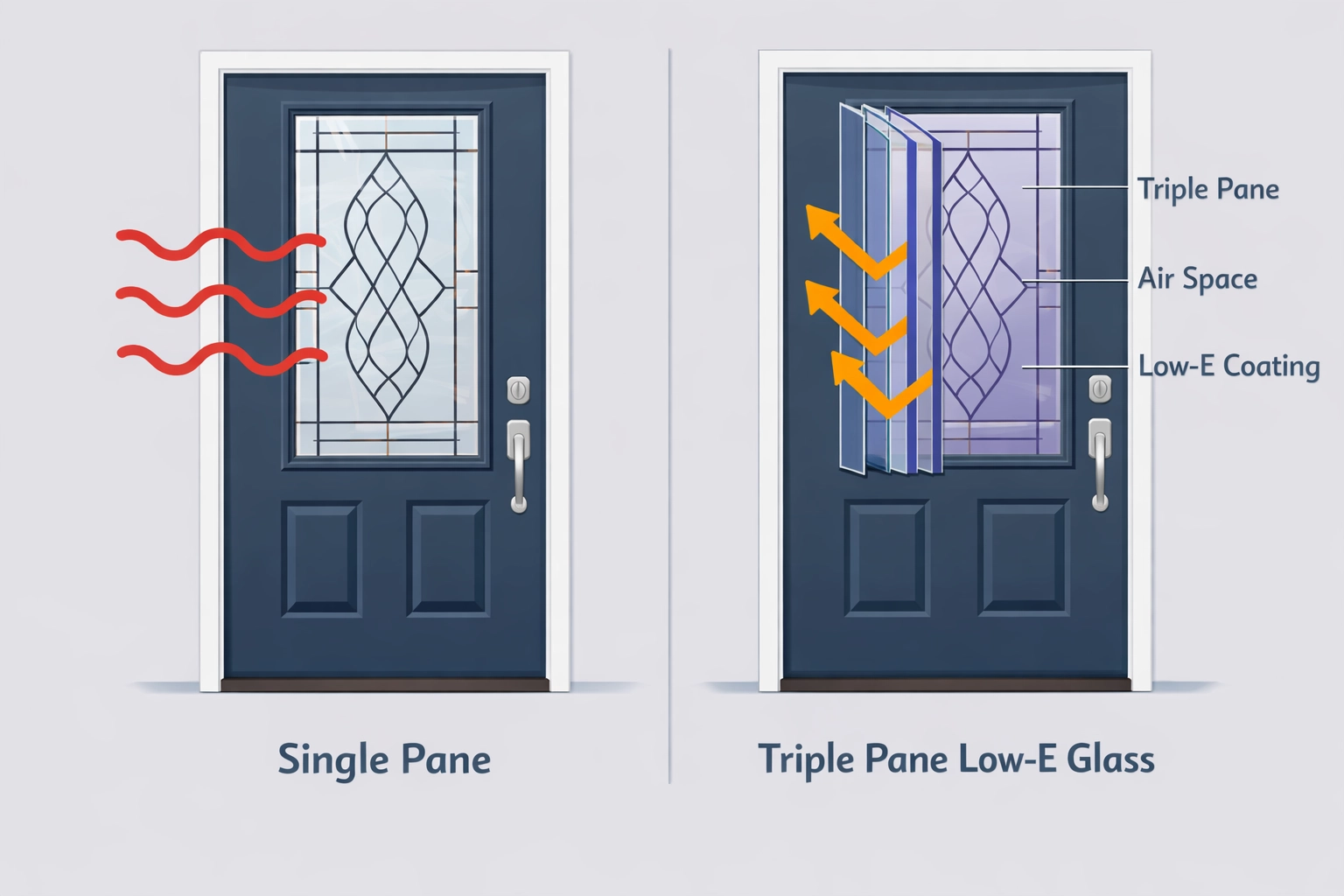
Single-pane glass transfers heat faster than almost any other material. It's basically a temperature highway between inside and outside.
Stand next to your door glass in winter. Feel the cold radiating off it? That's heat loss happening in real time.
Double-pane or triple-pane glass with low-e coating cuts heat transfer dramatically. The space between panes acts as insulation. The low-e coating reflects heat back inside.
You can replace just the glass panels without replacing the entire door. A handyman can swap them out in a couple hours.
Storm doors add another layer of protection. They create an air buffer that keeps temperatures stable.
Problem #4: Your Door Surface Feels Wrong
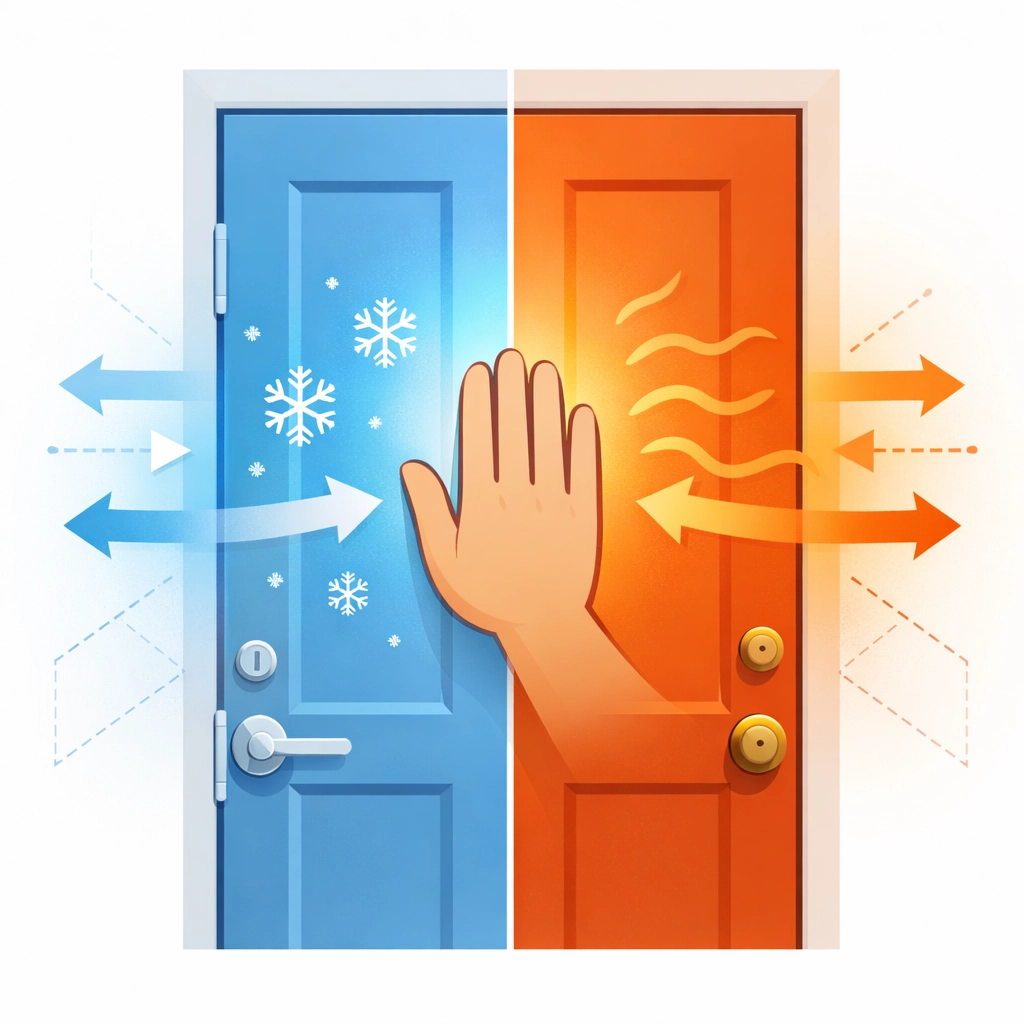
Do this test right now. Put your hand flat on the inside of your front door.
Does it feel cold in winter? Hot in summer? That's thermal bridging.
Thermal bridging means heat is transferring straight through your door despite the weatherstripping. The door material itself is leaking warmth.
This happens with:
- Thin doors without proper core insulation
- Metal doors without thermal breaks
- Older doors with deteriorated insulation
- Doors with damaged or compressed foam cores
If your door surface temperature matches the outside temperature, you're heating the neighborhood instead of your home.
Modern insulated doors have R-values between R-5 and R-6. That's real insulation that keeps heat where you want it.
Check your door's R-value. If it's below R-3, upgrade time.
Problem #5: Bad Installation Ruins Everything
Here's something most people don't know. Even the best energy-efficient door loses 20 to 40 percent of its performance with poor installation.
Your door needs:
- Square and level frame
- Proper shimming on all sides
- Air sealing around the entire frame
- Correct threshold adjustment
- Tight but not binding fit
Gaps around the frame let air leak behind your weatherstripping. No amount of caulk fixes a crooked installation.
Look at your door from outside. Is it square in the frame? Does it swing freely without rubbing? Does it latch without forcing?
If your door was installed more than 15 years ago, the standards were different. Modern installation techniques seal much better.
Professional installation includes spray foam insulation in the gaps around the frame. DIY installations often skip this step. That foam stops air infiltration cold.
How Much Money Are You Actually Losing?
Let's do the math for Vancouver.
Average heating costs here run $100 to $150 per month in winter. If your door is leaking 20 percent of your heat, that's $20 to $30 every single month.
Over a heating season from October to April, you're losing $140 to $210 just through your front door.
Add cooling costs in summer. Air conditioning leaks out just as fast as heat.
Most door fixes cost less than one year of wasted energy. Weatherstripping and door sweeps cost under $50. Professional adjustment runs $100 to $200. New weatherproofing saves money immediately.
Full door replacement seems expensive at $800 to $2,500. But you recoup that in 3 to 5 years through lower energy bills. Plus your home stays more comfortable.
What You Can Do This Week
Start with the easy fixes. Check your weatherstripping today. Replace it if you see cracks or compression.
Install a door sweep at the bottom. Takes 10 minutes.
Adjust your strike plate if the door doesn't seal tight. Tighten loose hinges.
Caulk any gaps you see between the door frame and your wall.
These quick fixes cost under $100 and cut your energy waste immediately.
For bigger problems like single-pane glass, poor insulation, or bad installation, call a professional. The money you save on energy bills covers the repair cost fast.
When To Call A Handyman
Some door problems need professional help:
- Frame is out of square
- Door won't stay closed without forcing
- Visible gaps you can't close with weatherstripping
- Door drags on the threshold
- Hinges pull away from the frame
A handyman can adjust your door, replace hardware, install new weatherstripping, and fix alignment issues in one visit.
For full door replacement or major frame repairs, get it done right the first time. Poor installation wastes more money than the installation cost.
Your Door Should Work For You
Your front door protects your home. It should also protect your wallet.
Check for these five problems today. Fix the easy ones yourself. Get help with the rest.
Every dollar you spend on door improvements comes back to you through lower energy bills and a more comfortable home.
Vancouver winters are cold enough without paying to heat the outside. Stop the leaks. Keep your money inside where it belongs.
Need help fixing your door problems? Randall The Handyman handles everything from weatherstripping replacement to full door installation. We'll get your front door sealed tight and saving you money.
